
Lesson 1
Speaking in manu tongues/read the text on page 54 and translate the unknown words
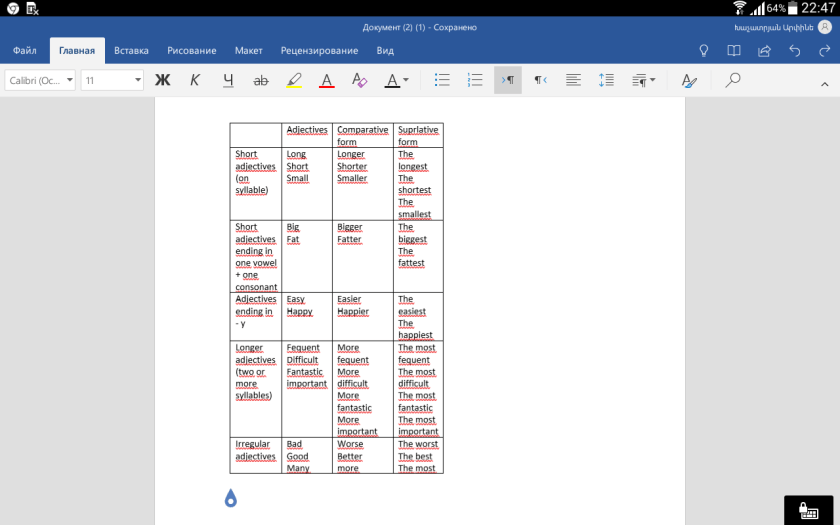
Grammar: adjectives
Hometask:ex.3/b,page 55,ex.7/b,page 56
Ex. 3 b.
1. Italian is more modern than (old / modern) Latin.
2. The Amazon River is longer than (short / long) the Nile.
3. Iceland is smaller than (big / small) India.
4. For most Europeans, learning Chinese is more difficult than (easy / difficult) learning Italian.
5. Sydney is further from (close to / far from) my country than Paris.
Ex. 7 b.
If can sometimes be a little difficult to learn a foreign language fluently. But there are many things you can do to make your learning more successful.
When you speak a foreing language, it’s normal to have an accent. That’s OK — other people can usually understand. It’s a good idea to listen to CDs ant try to imitate other speaker to make your pronunciation better.
If you see a new word, and you don’t know what it means, you can sometimes guess the meaning from words you know, or you can look up the word in a dictionary.
A lot of good language learners try not to translate things from their first language. Translation is sometimes a good idea, but try to think in the foreing language if you can!
It’s also normal to make mistakes. When your teacher corrects a mistake in your writing or speaking, think about it and try to see why it’s wrong. But it’s more important to communicate, so don’t be afraid to speak!
Lesson 2
Speaking in many tongues/to retell the text
Hometask:ex.8/c,d,page 57
C.
d.
1. Many people say that Hungarian is one of the most difficult (difficult) languages.
2. When Sarah won $1,000, she was the happiest (happy) girl in the world.
3. The internet was one of the most important (important) inventions of then 1960s.
4. Vatican City is the smallest (small) country in the world.
5. When my grandmother died, it was one of the worst (bad) times in my life.
6. The Amazon is the longest (long) river in the world.
 Արփինե Խաչատրյանի բլոգ